Skip to content
Holiday Ops keeps the queues stuffed with grinders, boosters, and credit-farm builds—then it ends, and the matchmaking mood shifts fast. At the same time, Wargaming is lining up Update 2.1.1 in mid-January 2026 as another big beat in the Tier XI era: new vehicles, a new U.S. medium branch, and a rebalance pass aimed at making Tier XI feel less awkward and more “endgame.”
The Tier XI rollout has delivered novelty, but it also created a recurring complaint cycle: new mechanics arrive, then the community asks if battles are actually getting better—or just more complicated, more bursty, and more expensive to play consistently.
That frustration spikes right after Holiday Ops because players have fresh memories of loot-box value debates, time-gated grinds, and “I’m only logging in for bonuses” behavior. When the event bonuses vanish, the same tanks and maps suddenly feel harsher, and balance issues stand out more.
January 2026 news needs to be read as a two-part story: the post–Holiday Ops economy and matchmaking shift (January 12 is the big switch), followed by the practical consequences of Update 2.1.1—especially how the new U.S. autocannon heat mechanic and Tier XI buffs will affect real matches.
TL;DR: WoT Update news for January 2026
- Holiday Ops 2026 ends January 12, 2026 (08:00 UTC+2), and the credit/XP “party mode” queues cool off immediately afterward.
- Update 2.1.1 is scheduled for mid-January 2026 and is positioned as a Tier XI expansion beat, not a tiny hotfix.
- New U.S. medium branch begins at Tier VII (T20) and introduces a heat-managed autocannon concept—high potential, high controversy.
- Six Tier XI tanks are targeted for rebalance, with Wargaming explicitly framing the changes as comfort + role clarity improvements.
- Random Events expand to more maps, and sound simulation is being pushed as tactical clarity—useful, but not a balance cure-all.
What matters first: January 12 ends the “economy bubble”
Holiday Ops is not just a festive event. It’s a temporary economic rule change. When the EU portal says Holiday Ops 2026 ends on January 12, 2026 at 08:00 (UTC+2), that date becomes a line in the sand for how people play.
During the event window, players tend to:
- queue more often in Premium and rental vehicles to maximize credit efficiency,
- stack boosters and grind lines that would feel miserable without the seasonal tailwind,
- accept “messier” matches because the reward loop feels worth it.
After January 12, those incentives snap back. Credit pressure returns, and the playerbase splits more clearly into:
- meta-focused regulars who play for win rate and performance,
- returning/casual players who suddenly feel the grind bite again.
Practical reality: this is why January balance debates often feel louder than the patch notes justify. The game didn’t suddenly get worse—the cushion disappeared. Tanks that were “fine” while printing credits start to feel punishing again when every match is a bill.
Update 2.1.1 in mid-January: Tier XI is being treated like a live ecosystem
Wargaming’s messaging across official channels frames Update 2.1.1 as arriving in mid-January 2026 and includes four key promises: two new Tier XI tanks, a new U.S. medium line starting at T20 (Tier VII) and reaching Tier XI, a heat-managed autocannon mechanic, and a rebalance of six Tier XI vehicles.
That matters because it signals a design stance: Tier XI isn’t a one-time “new tier drop.” It’s being handled like a rotating endgame where new additions and tuning passes are expected every few months. In theory, that’s healthier than letting the tier stagnate. In practice, it can also mean meta turbulence—constant “what’s best now?” energy that some players love and others hate.
Reality check: if Tier XI becomes the place where the strongest mechanics and freshest toys live, Tier X risks feeling like a stepping-stone instead of a destination. That’s not a small identity problem for a game that spent years training its audience to see Tier X as the apex.
New U.S. medium tanks with a heat-managed autocannon: innovation or future headache?
The headline mechanic for January isn’t a map or a UI panel—it’s the autocannon heat-management system attached to the new U.S. medium branch. On paper, heat mechanics can be great: they reward timing, discipline, and target selection instead of mindless holding the trigger. But the community’s judgment is usually brutal and simple:
Does it feel fair to fight?
How heat mechanics can improve gameplay
- Trade-offs become visible: burst damage comes with cooldown and risk of overcommitting.
- Bad aim gets punished: spraying into tracks and spaced armor is no longer “free.”
- Positioning matters more: overheating at the wrong time forces relocation, not tunnel vision.
How heat mechanics can become toxic in random battles
- Ridgeline farming: if the line can dump burst damage from strong hull-down positions, heat doesn’t feel like a downside—it feels like a timer between bullying sessions.
- “Clip-and-dip” pressure: autocannon-style bursts can punish slower tanks that can’t retreat or reset trades quickly.
- Learning-load inflation: new mechanics are exciting, but they also widen the gap between veterans and returning players who just want readable engagements.
Under-discussed angle: heat mechanics often shift balance conversations away from raw stats (DPM, armor, view range) and into “feel.” If the U.S. mediums are tuned to be merely average but feel oppressive because of burst windows, they’ll still create backlash. Players don’t rage at spreadsheets—they rage at moments that feel unavoidable.
New Tier XI vehicles: mobility tricks are becoming the new “flavor”
Official previews highlight a new Chinese Tier XI tank destroyer (PTZ-78) with solid-fuel boosters, marketed around acceleration bursts and fast repositioning. That’s not just a new tank—it’s another step toward Tier XI having more “ability-like” identity.
Boosters can be healthy when they create counterplay:
- a TD that repositions has to spend a resource and reveal intent,
- teams that anticipate booster rotations can punish overextension,
- stale camping patterns can be disrupted by movement tools.
Boosters become unhealthy when they erase punishment windows:
- peek, deal damage, booster out—with too little exposure,
- overcommitment becomes survivable too often,
- slow tanks lose agency because the fight is decided by mobility tech they can’t match.
Practical expectation: if booster vehicles are strong on maps with safe retreat lines, they will inflate frustration. If they’re strongest on open maps where misplays can be punished, they’ll be accepted faster. Map pool and spawn geometry matter more than most patch notes admit.
The Japanese angle: STK-2 brings “active gun-cooling” risk/reward
The second confirmed addition is the STK-2, a Japanese Tier XI heavy tank built around an enhanced active gun-cooling system. The core idea is that the gun heats up when firing, and the higher the temperature climbs, the more its parameters shift. After each shot, it cools down during reload, gradually returning toward base performance—creating a timing mini-game that rewards disciplined firing instead of panic-spamming.
Why this matters in real matches: heavy tanks usually win by repeating consistent trades under pressure. A temperature-driven gun system risks turning “comfort” into a skill check: the player who manages heat well keeps accuracy/consistency; the player who forces shots under stress may lose reliability exactly when the brawl gets messy. That’s either a refreshing design (more decision-making) or a frustration multiplier (another system to fight while also fighting enemy armor).
If you want the American context: Ares 90 C and the new US autocannon line
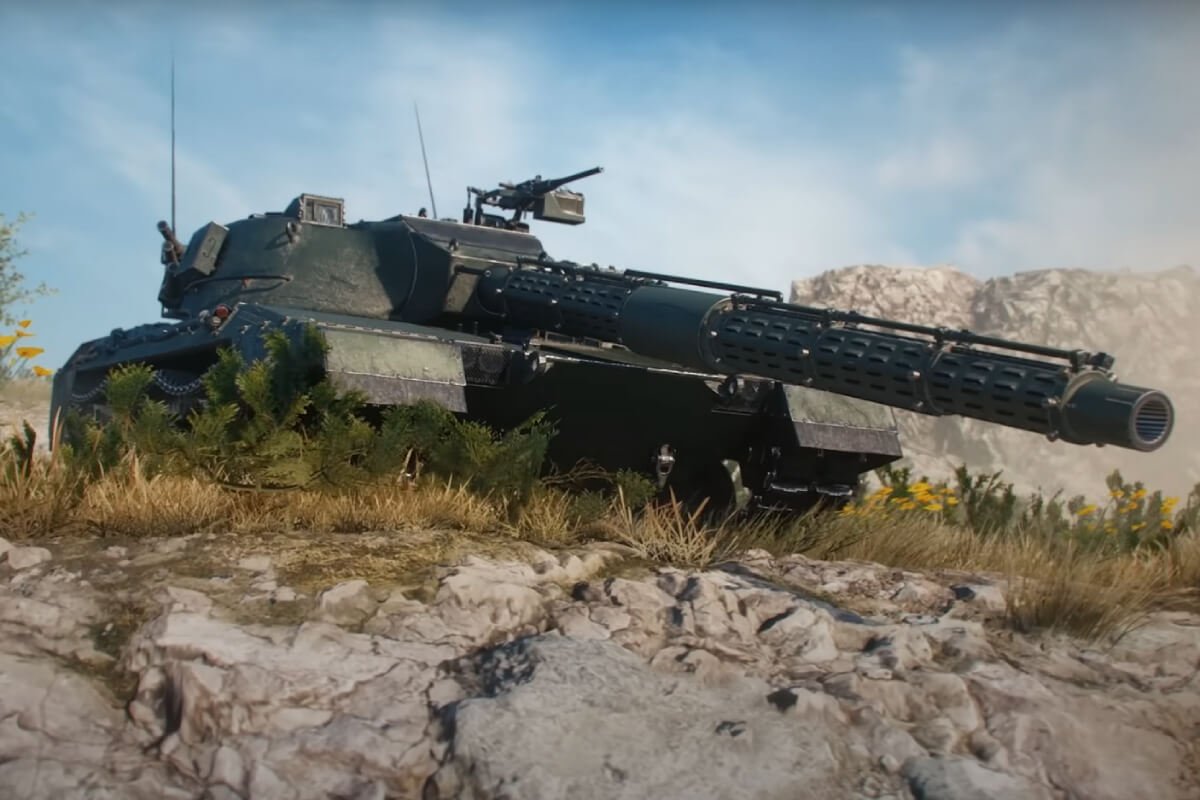
While the PTZ-78 and STK-2 are the two new Tier XI vehicles highlighted up front, Update 2.1.1 also pushes a major American pillar: a brand-new branch of U.S. medium tanks starting at the T20 (Tier VII) and culminating in the Ares 90 C (Tier XI). The hook is a next-generation autocannon with a heat-management system: there’s no classic fixed reload between shots, but the gun becomes less accurate as it overheats. Push it too far and it locks until fully cooled.
There’s also a survivability/mobility safety net baked into the line: these mediums inherit the reserve track system (similar concept to the Yoh line), which helps them stay mobile even after taking track damage—something that directly affects how aggressively they can take angles and how hard it is to “freeze” them with tracking fire.
What to watch for (and why players will argue about it): if the Ares 90 C line can dump damage in short windows, then reset safely thanks to mobility + reserve tracks, the community will call it oppressive. If overheating meaningfully punishes bad timing, it can land as a genuinely fair “skill expression” medium line instead of another burst-meta headache.
Note: Vehicle mechanics and final characteristics may still change before release.
Tier XI rebalance: comfort buffs are nice, but do they fix the tier’s real problem?
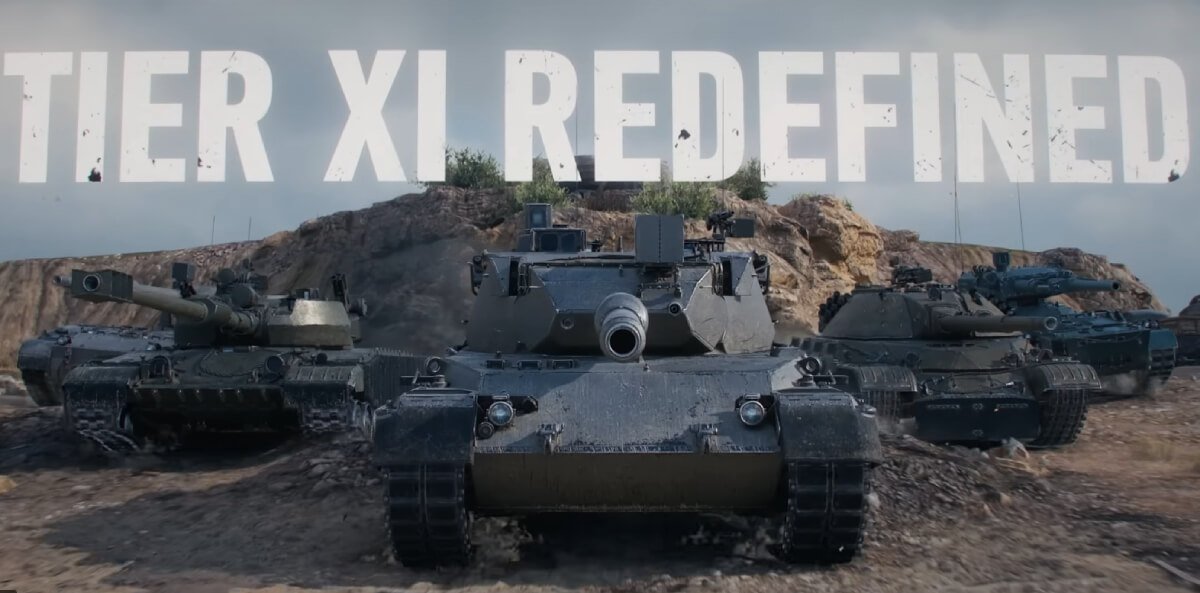
Wargaming explicitly names six Tier XI vehicles scheduled for characteristic adjustments in Update 2.1.1: Leopard 120 Verbessert, AS-XX 40 t, Object 432U, Hirschkäfer, CS-67 Szakal, and Strv 107-12. The stated goal is to make them more “comfortable, balanced, and effective” in their roles.
That’s a reasonable aim, but it dodges the harder Tier XI question the community keeps circling:
Is the tier balanced around role diversity, or around who can brute-force a lane?
One of the clearest community arguments is that Tier XI heavies can dominate the tier’s flow, which makes medium and flexible playstyles feel secondary unless they have exceptional tools. In threads reacting to the rebalance list, players openly question whether certain buffs are needed—or whether the tier is being tuned to keep up with heavy-dominated reality rather than correcting it.
“Comfort” changes are often the safest kind of patch. They reduce clunk, smooth gun handling, adjust survivability margins. But comfort tuning alone won’t fix:
- snowball tempo (one lane collapses and the match becomes a cleanup),
- role overlap (vehicles that do too many jobs too well),
- counterplay scarcity (too few reliable answers in standard random lineups).
If the six rebalanced tanks become stronger without meaningful checks, Tier XI could drift toward “who has the better boosted/buffed package” rather than “who played the map better.” The patch needs to be judged in replays, not headlines: do the changes create new decision points, or just new damage spikes?
Random Events expansion: variety is good, but agency is the real currency
Update 2.1 messaging highlights Random Events expanding to three additional maps: Mountain Pass, Highway, and Ghost Town. Wargaming’s pitch is consistent: events open routes, change cover, and prevent matches from playing identically every time.
In practice, Random Events live or die on one factor:
Are they strategically readable?
When events are predictable (fixed timing, clear area, consistent effect), good players adapt and plan. When events swing the “correct” lane too hard—creating cover that favors one spawn, or removing cover that makes a defense impossible—players perceive it as scripted RNG that overrides preparation.
January context: coming right after Holiday Ops, players may already feel “event fatigue.” If Random Events create even a few memorable matches where an event decides a push window unfairly, the backlash will feel disproportionate—because the community’s tolerance is lower in the post-event slump.
Sound physics simulation: a real improvement, but not the fix players are arguing about
Release notes for 2.1 describe sound physics simulation using concepts like occlusion (blocked sound), diffraction (sound bending around obstacles), and reflections (early reflections), with a note that it can slightly increase system load. This is a genuine tactical upgrade—better audio cues can improve awareness, especially in urban brawls where line-of-sight is fragmented.
But it won’t end the loudest community debates, because those debates are rarely about immersion. They’re about:
- balance perception (what feels unbeatable),
- match quality (blowouts vs close games),
- economy pressure (how punishing “just playing” feels).
Expert tip for players: if audio changes feel “off” after the patch, the fastest sanity check is testing in a controlled setting (Training Room / familiar maps) before blaming instincts. Sound changes can subtly alter how quickly players react to flanks—and that can change win rates more than people want to admit.
The real January meta shift: it’s not only the patch, it’s the population
Every January patch gets over-credited for changes that are actually caused by player behavior. Post–Holiday Ops, a common pattern appears:
- fewer casual grinders queueing nonstop,
- more consistent veterans returning to comfort picks,
- more “testing chaos” immediately after a major update as people grind new lines and experiment in randoms.
That’s why “matchmaking feels worse” complaints spike in two windows:
- right after Holiday Ops ends (bonus-driven behavior disappears),
- right after the patch lands (new content disrupts norms).
Practical advice that isn’t fluffy: players who hate volatility usually enjoy January more by waiting a few days after the patch. Not because the patch is bad—but because the queues stabilize once the initial “try it now” rush calms down.
Conclusion: January 2026 is a test of Tier XI’s direction, not a one-off patch
January 2026’s update news isn’t about a single shiny feature. It’s about whether Tier XI is becoming a coherent endgame or a rotating showroom of mechanics that drift toward burst damage, mobility tricks, and constant rebalance churn.
Holiday Ops ending on January 12 will reshape the feel of matches regardless of patch notes. Update 2.1.1 in mid-January will then add fuel: a new U.S. medium branch with heat-managed autocannon gameplay, two new Tier XI vehicles pushing mobility identity, and a rebalance pass meant to make six Tier XI tanks more comfortable and role-accurate.
The fair way to judge January isn’t “is it exciting?” It’s:
- Does the autocannon line add decision-making without creating unavoidable burst bullying?
- Do the Tier XI buffs reduce clunk without inflating heavy dominance or role overlap?
- Do Random Events increase variety without stealing agency from good reads and good planning?
If the answer is mostly “yes,” January becomes the month Tier XI starts to feel like a stable ecosystem. If the answer is “sometimes,” the community will keep treating Tier XI as an expensive experiment—and the trust gap will remain the real meta boss.
Sources
- World of Tanks EU — Update 2.1.1 tanks overview (Tier XI rebalance list, new line)
- Steam — World of Tanks announcements (Update 2.1.1 mid-January framing)
- World of Tanks EU — Holiday Ops 2026 event guide (end time Jan 12, 2026)
- World of Tanks EU — Update 2.1 Common Test (Random Events maps, audio/UI focus)
- Reddit — Community discussion on Tier XI balance and rebalancing targets